Tacos Menu: 10 Best Types, Prices, Calories & Tips
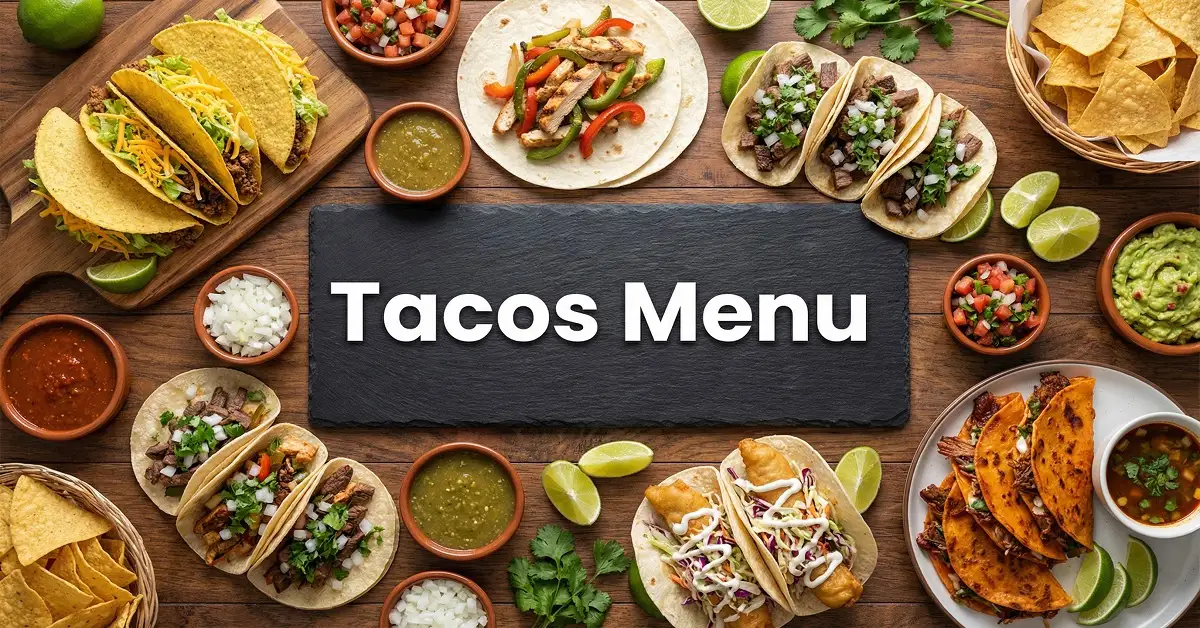
A tacos menu in the U.S. usually includes crispy tacos, soft tacos, street tacos, fish tacos, birria tacos, shrimp tacos, veggie tacos, and breakfast tacos. It also includes different tortillas, fillings, toppings, sauces, combo meals, and sides. This guide breaks down the most common taco types, average U.S. price ranges, calorie patterns, and the best taco picks for different tastes so readers can compare options fast and order with more confidence.
Current chain menu and nutrition pages show that simple tacos can start around $1.99, while premium seafood or specialty tacos can go much higher, and calorie counts can swing from the low hundreds to well over 400 per taco depending on shell, filling, and sauce.
Tacos Menu at a Glance
| Taco Type | Usual Tortilla | Common Filling | Typical Toppings | Average U.S. Price Range | Usual Calorie Range |
| Crunchy taco | Hard corn shell | Seasoned beef | Lettuce, cheese, salsa | $1.99 to $3.50 | 170 to 250 |
| Soft taco | Flour tortilla | Beef or chicken | Lettuce, cheese, salsa | $1.99 to $4.50 | 180 to 320 |
| Street taco | Corn tortilla | Carne asada, chicken, carnitas | Onion, cilantro, salsa, lime | $2.50 to $5.00 | 120 to 220 |
| Fish taco | Corn or flour tortilla | Grilled or fried fish | Cabbage, crema, pico, lime | $3.30 to $6.50 | 230 to 390 |
| Birria taco | Corn tortilla | Slow-cooked beef | Onion, cilantro, cheese, consomé | $3.50 to $6.50 | 250 to 450 |
| Shrimp taco | Corn or flour tortilla | Grilled or fried shrimp | Slaw, crema, pico, lime | $3.30 to $6.50 | 180 to 340 |
| Veggie taco | Corn, flour, or lettuce wrap | Beans, potato, grilled vegetables | Salsa, guac, lettuce, cheese | $2.50 to $5.50 | 150 to 320 |
| Breakfast taco | Flour or corn tortilla | Egg, bacon, sausage, potato | Salsa, cheese, avocado | $2.00 to $4.50 | 370 to 610 |
These ranges reflect current menu examples from Taco Bell, Rubio’s, Velvet Taco, and Fuzzy’s, plus the fact that local taco shops often price by protein, taco size, and city. Taco Bell lists Crunchy Taco and Soft Taco at $1.99 with 170 and 180 calories. Rubio’s lists fish tacos from about 230 to 390 calories à la carte. Velvet Taco shows chicken tacos around the low 300s to low 400s. Fuzzy’s breakfast taco menu shows several egg-based tacos from 370 to 610 calories.
Most Common Taco Types on a Tacos Menu
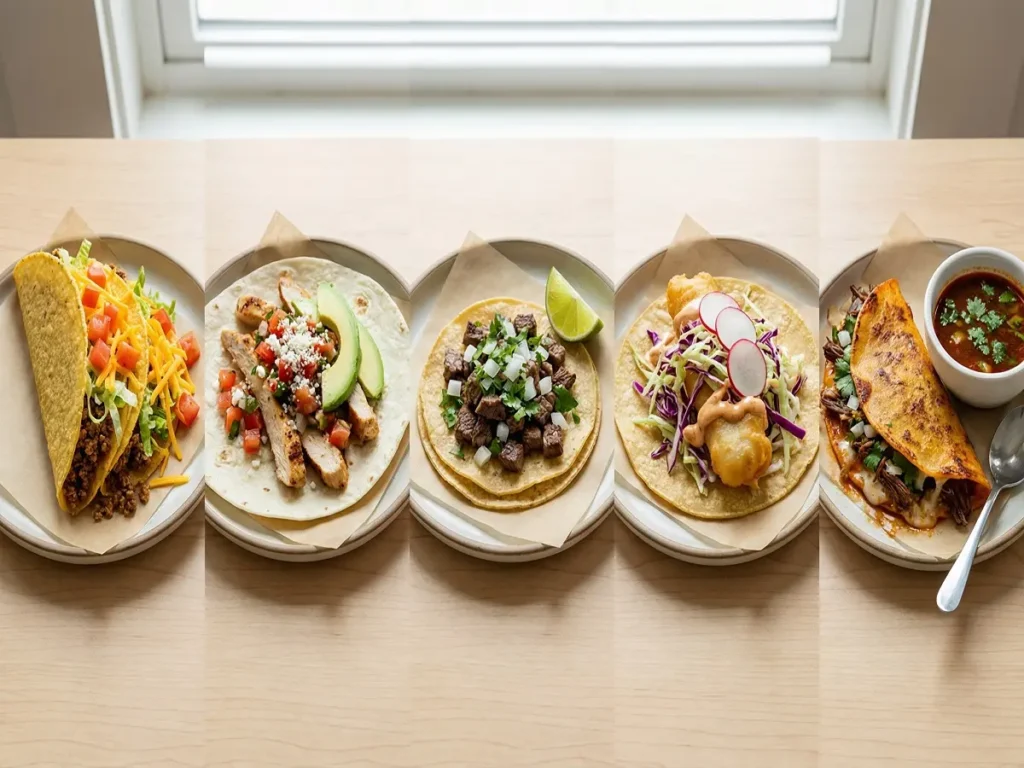
Crunchy tacos are the most familiar fast-food style. They usually come in a hard corn shell with seasoned beef, lettuce, shredded cheese, and sauce. Soft tacos use a flour tortilla and often feel a little fuller because the wrap holds more filling. Taco Bell’s current menu still shows both as low-cost staples, which is why they remain the baseline many readers compare other tacos against.
Street tacos are smaller and simpler. They usually come on corn tortillas with carne asada, chicken, carnitas, or al pastor, then get topped with onion, cilantro, salsa, and lime. Fish and shrimp tacos are more common on coastal and Southwest-style menus, often with cabbage, crema, and pico. Rubio’s current menu and nutrition guide show how seafood tacos can range from lighter grilled options to richer beer-battered styles.
Birria tacos are richer and heavier because they often include slow-cooked beef, cheese, and a griddled tortilla, plus consomé on the side. Veggie tacos usually use beans, potato, cauliflower, mushrooms, or grilled vegetables. Breakfast tacos usually lean on egg, bacon, sausage, chorizo, and potato, and they can get calorie-heavy quickly, which Fuzzy’s current breakfast menu makes very clear.
What Comes in a Taco
Most taco menus are built from the same core parts: tortilla, protein, toppings, and sauce. Corn tortillas are common in street tacos, carne asada tacos, and fish tacos. Flour tortillas show up more in soft tacos and breakfast tacos. Hard shells bring crunch, while lettuce wraps show up as a lighter option on some menus.
For protein, beef, chicken, steak, pork, fish, shrimp, beans, and potato are the main menu drivers. Then come the toppings: onion, cilantro, lettuce, pico de gallo, salsa roja, salsa verde, cheese, guacamole, crema, and lime. After that, sauce changes the whole taco.
Baja sauce works well with seafood, chipotle sauce adds smoke and heat, salsa verde tastes fresher, and queso makes everything richer. Velvet Taco’s nutrition calculator and Rubio’s menu both show how much sauces and extras can change the final calorie count.
Taco Menu Prices in the USA
Taco prices change by chain, city, protein, and portion size, so broad ranges work better than one fixed number. Right now, verified chain data shows that entry-level tacos can still sit around $1.99 at major fast-food brands, while combo-style packs and premium tacos cost more. Rubio’s and Velvet Taco also show how seafood, steak, and specialty builds raise the price and calorie load at the same time.
| Menu Category | Average U.S. Price Range | What Readers Can Expect |
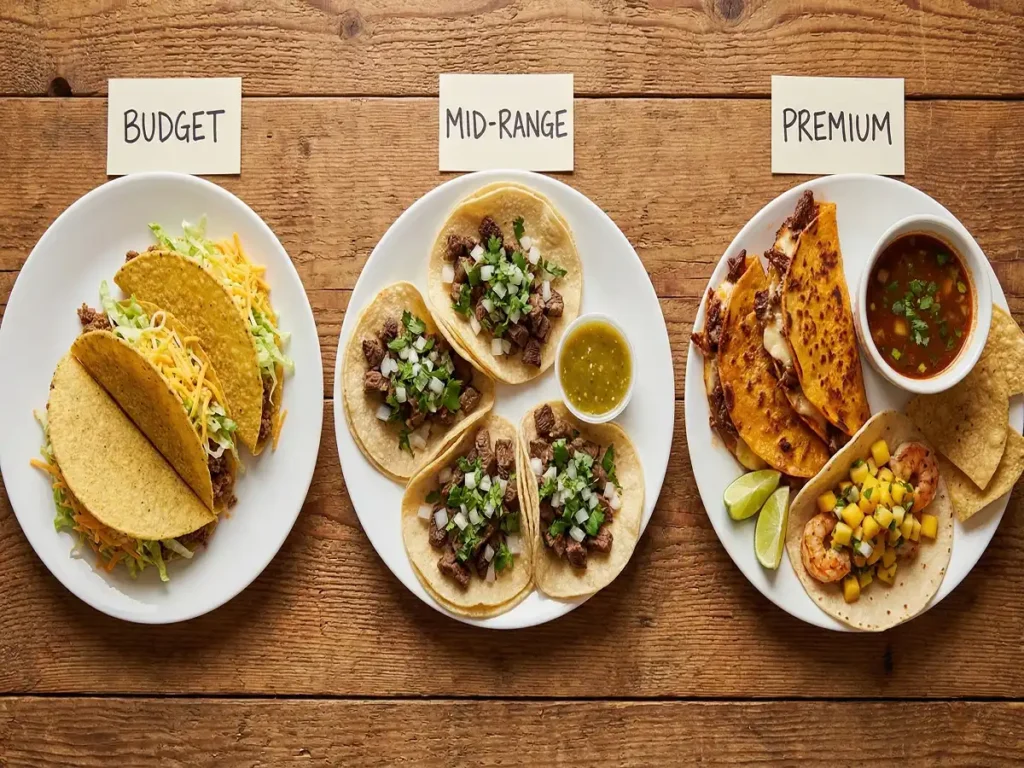
| Budget fast-food tacos | $1.99 to $3.50 each | Basic crunchy or soft tacos |
| Mid-range taco shop tacos | $2.50 to $5.50 each | Better tortillas, grilled meats, fresher toppings |
| Premium specialty tacos | $3.50 to $7.00 each | Birria, seafood, steak, house sauces |
| Combo meals | $6.00 to $12.99 | Two or three tacos with sides or drink |
| Family packs | $12.99 to $30+ | Shareable taco bundles or party packs |
What this really means is simple: readers should compare taco size, protein, and sides, not just the sticker price. A smaller street taco can cost less than a loaded specialty taco, but it may also be half the meal.
Taco Calories and Nutrition
Taco calories usually rise or fall based on three things first: shell, cooking style, and sauce. A small corn-tortilla taco with grilled meat, onion, cilantro, and salsa is usually one of the lighter menu choices. Taco Bell’s standard crunchy and soft tacos sit at 170 and 180 calories, while Rubio’s seafood tacos reach much higher when batter, cheese, or richer sauces enter the build. Fuzzy’s breakfast tacos can climb even more because egg, meat, potato, cheese, and flour tortilla stack calories fast.
The lightest taco styles are usually street tacos, grilled chicken tacos, grilled fish tacos, and lettuce-wrap tacos. For protein-focused picks, grilled chicken, carne asada, barbacoa, and shrimp usually work well. For lighter vegetarian picks, black bean tacos and grilled veggie tacos tend to beat cheese-heavy or fried potato versions.
Best Tacos to Order Based on What You Want
If the goal is classic flavor, go with a beef crunchy taco or soft taco. If the goal is crisp texture, crunchy tacos still lead, though a griddled birria taco can also work. If the goal is heat, chipotle chicken or spicy shrimp tacos usually give the best balance of spice and flavor. For seafood, fish tacos are the easiest crowd-pleaser, while shrimp tacos feel a bit richer.
For vegetarian readers, black bean or grilled veggie tacos are usually the safest first pick. For value, basic crunchy tacos, soft tacos, and small street taco combos still make the most sense. For kids, mild soft tacos often work better than crunchy tacos because they are easier to hold and spill less. These picks match current chain menus and the most common taco shop patterns shown in your draft.
Street Tacos vs Crunchy Tacos vs Specialty Tacos
| Taco Style | Tortilla | Size | Toppings | Flavor Style | Price | Best For |
| Street tacos | Corn | Small | Onion, cilantro, salsa, lime | Simple, fresh, meat-forward | $2.50 to $5.00 | Traditional taco-shop feel |
| Crunchy tacos | Hard corn shell | Medium | Lettuce, cheese, salsa | Crispy, familiar, fast-food or Tex-Mex style | $1.99 to $3.50 | Cheap, classic crunch |
| Specialty tacos | Corn or flour | Medium to large | Slaw, crema, queso, avocado, sauces | Richer and more layered | $3.50 to $7.00 | Bold flavor and premium ingredients |
Street tacos are the cleanest build. Crunchy tacos are the easiest entry point. Specialty tacos give the biggest flavor jump, but they also bring higher calories and price more often than not.
Build Your Own Taco Menu
A better taco order usually starts with the tortilla. Choose corn for a more classic taco-shop feel, flour for a softer bite, hard shell for crunch, or lettuce wrap for a lighter option. Next, choose protein: beef for classic flavor, chicken for a leaner pick, steak for grilled depth, pork for richness, seafood for a fresher feel, or beans and vegetables for a meat-free build.
After that, add toppings with purpose. Onion, cilantro, pico, and lime keep a taco light and fresh. Cheese, guac, slaw, and crema make it heavier. Then choose sauce. Salsa verde and red salsa keep things brighter. Queso, chipotle sauce, and creamy seafood sauces push the taco into richer territory. Finally, decide whether the meal needs rice, beans, chips, fries, or a combo.
Popular Taco Menu Add-Ons
The most common taco menu add-ons are chips and salsa, queso, guac, rice, beans, street corn, fries, churros, and drinks. Rubio’s current menu shows chips, beans, rice, street corn, fries, and desserts as common pairings, while Taco Bell party packs and value menus show how sides and bundles shape value. These extras matter because they can change both meal cost and total calories a lot more than readers expect.
Vegetarian, Gluten-Free, and Lighter Taco Options
Vegetarian tacos are now common on U.S. menus, usually with black beans, pinto beans, potato, mushrooms, cauliflower, or grilled vegetables. For gluten-free diners, corn tortillas are often the best starting point, but sauces, breading, and cross-contact still matter. Fuzzy’s states that menu items can face cross-contact and does not treat most items as certified gluten-free, so readers should always check with the restaurant before ordering.
For lighter tacos, grilled chicken, grilled fish, simple street tacos, and veggie tacos with salsa instead of queso are usually the smartest picks.
Taco Menu Terms Explained
A few taco terms show up again and again on U.S. menus. Al pastor usually means marinated pork. Birria means slow-cooked meat, often served with broth. Barbacoa is tender slow-cooked beef. Carnitas is rich slow-cooked pork. Carne asada is grilled steak. Baja often points to fish or shrimp tacos with slaw and creamy sauce. Consomé is the broth served with birria tacos. Pico de gallo is chopped tomato, onion, cilantro, and lime. Queso fresco is a soft crumbly cheese. Crema is a rich topping similar to sour cream. These terms help readers read a tacos menu faster and compare items with less guesswork.
How to Choose the Best Taco on Any Menu
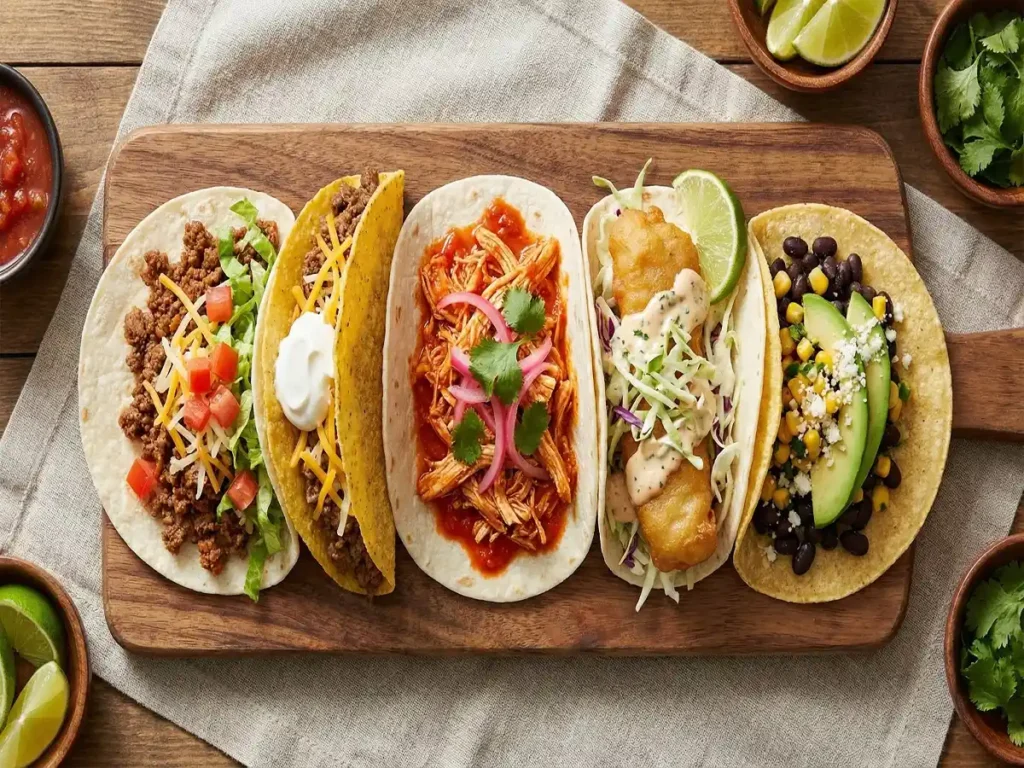
Then check the sauce and topping load so you know whether the taco will taste fresh, smoky, spicy, rich, or heavy. After that, compare combo value, because the better deal is often the one that includes a useful side, not just the lowest taco price. Also keep an eye on premium add-ons like guac, queso, shrimp, fish, steak, and birria because they can raise the total fast.
Last, choose based on texture and spice. Some readers want crispy and cheesy. Others want soft, bright, and simple. That choice matters as much as the protein.
FAQs
What is the most popular taco filling?
Beef and chicken remain the most common broad menu fillings, while taco shops also lean hard on carne asada, carnitas, and al pastor.
Are soft tacos healthier than crunchy tacos?
Sometimes yes, but not always. A small soft taco with grilled chicken and salsa can be lighter, while a large flour tortilla with extra cheese and creamy sauce can be heavier than a simple crunchy taco.
How much do tacos usually cost in the U.S.?
A good working range is about $1.99 to $3.50 for budget tacos, $2.50 to $5.50 for mid-range taco shop tacos, and $3.50 to $7.00 for premium specialty tacos.
Which taco is best for low calories?
Street tacos with fenced chicken, grilled fish, or carne asada are usually among the best brighter options, especially with corn tortillas and simple toppings.